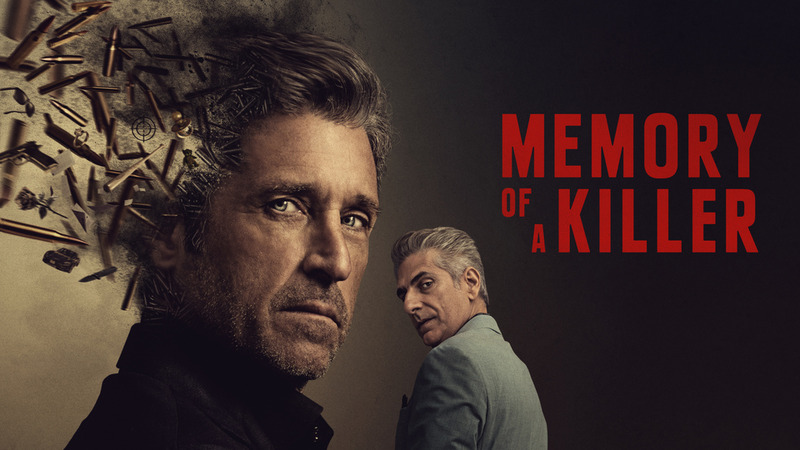
“Samurai” is the episode where Memory of a Killer stops flirting with moral ambiguity and fully plunges into it. The series has always been about compartmentalization, how Angelo has kept his work as a contract killer sealed off from his identity as a father, but this hour makes it painfully clear: the walls are cracking, and Alzheimer’s isn’t even the most dangerous thing coming for him.
Angelo: Precision, Guilt, and a Mind That Won’t Let Go
Patrick Dempsey delivers a very layered performance here. Angelo is methodical, frighteningly calm, and deeply exhausted. The opening flashback to Robert Parks’ murder immediately frames the episode around consequences. This is not a job that stays buried. Every kill echoes, and now those echoes are aimed directly at his daughter.
The Internal Affairs plotline is classic crime-thriller territory, but "Samurai" elevates it by forcing Angelo into a corner he doesn’t want to occupy. Killing Marco Garcia isn’t just another assignment, it’s a line Angelo knows he shouldn’t cross. A cop. A father. A man who believes he’s doing the right thing. The fact that Angelo hesitates matters, because it shows us that his conscience is still alive, even if it’s slowly being smothered.
The insulin plan is chilling in its simplicity, and the way Angelo mentors Joe through the logic of making a murder look like an accident feels like a master class in quiet horror. This isn’t violence fueled by rage, it’s violence as routine.
Fathers and Sons: The Episode’s Quiet Obsession
What makes “Samurai” so effective is how often it mirrors Angelo’s relationship with Maria against Garcia’s relationship with his son. Garcia’s “Samurai Lord” is reckless, lost, and desperate for identity, exactly the kind of kid the system chews up and spits out. When Angelo realizes the son will likely take the fall, the episode pivots from assassination to psychological warfare.
The moment Garcia believes his son murdered Marty is devastating. Watching a father help his child cover up a crime, even when he knows the truth, forces Angelo to confront his own hypocrisy. He is Garcia. The difference is only timing.
Their final confrontation in the woods is one of the strongest scenes of the series so far. Angelo doesn’t win with a gun, he wins with leverage, empathy, and shared guilt. When he helps Garcia dig, it’s not mercy. It’s recognition.
 |
| "Samurai" - MEMORY OF A KILLER. Pictured: Patrick Dempsey as Angelo. Photo: Danielle Blancher/ FOX © 2026 Fox Media LLC. All Rights Reserved. |
Marty’s unmasking is brutal and overdue. The reveal that he sold Eddie out and was never truly loyal to anyone but himself, cements the episode’s theme: everyone is pretending to be someone they’re not. His death is swift, ugly, and deeply personal. Angelo killing Marty isn’t about strategy; it’s about betrayal.
The accidental phone call to Maria immediately after (“Dutch, it’s done”) is a masterstroke of tension. It’s the kind of mistake that feels inevitable for a man juggling secrets, stress, and a failing memory. Even if Maria didn’t fully register it, the audience knows, this won’t stay buried.
Maria, Dave, and the Illusion of Safety
The accidental phone call to Maria immediately after (“Dutch, it’s done”) is a masterstroke of tension. It’s the kind of mistake that feels inevitable for a man juggling secrets, stress, and a failing memory. Even if Maria didn’t fully register it, the audience knows, this won’t stay buried.
Maria, Dave, and the Illusion of Safety
Maria’s storyline continues to be one of the show’s emotional anchors. Her fear is raw and unprocessed, and her desire to reclaim control, by asking for a gun, makes perfect sense. The firing range scene with Dave is intimate, awkward, and charged with unresolved emotion. Their chemistry feels dangerous in a different way than Angelo’s world: quieter, but no less destabilizing.
Maria’s comment that “you aren’t safe anywhere” cuts straight through Angelo. Because he knows the truth, no one is ever truly safe from the violence of the world.
Maria’s comment that “you aren’t safe anywhere” cuts straight through Angelo. Because he knows the truth, no one is ever truly safe from the violence of the world.
Dutch, Trust, and the Ferryman
Dutch’s admission that what Angelo doesn’t know could “wipe out the eastern seaboard” reframes their entire relationship. Dutch isn’t a partner, he’s a gatekeeper of secrets, and Angelo is realizing just how expendable he might be.
The Ferryman looms larger than ever by episode’s end. The mythological symbolism isn’t subtle, but it works. The Ferryman doesn’t kill, he transports. And Angelo is finally ready to confront the man moving the pieces behind the curtain.
 |
| "Samurai" - MEMORY OF A KILLER. Pictured: Odeya Rush as Maria. Photo: Danielle Blancher/ FOX © 2026 Fox Media LLC. All Rights Reserved. |
Final Verdict
“Samurai” is sharp. It’s an episode about fathers failing their children, about systems that rot from the inside, and about how violence doesn’t just destroy bodies, it corrodes identity. By the final moments, Angelo isn’t running from who he is anymore. He’s hunting the truth, even if it leads him straight into the river.
And once you meet the Ferryman, there’s no turning back.
And once you meet the Ferryman, there’s no turning back.